
SOLD
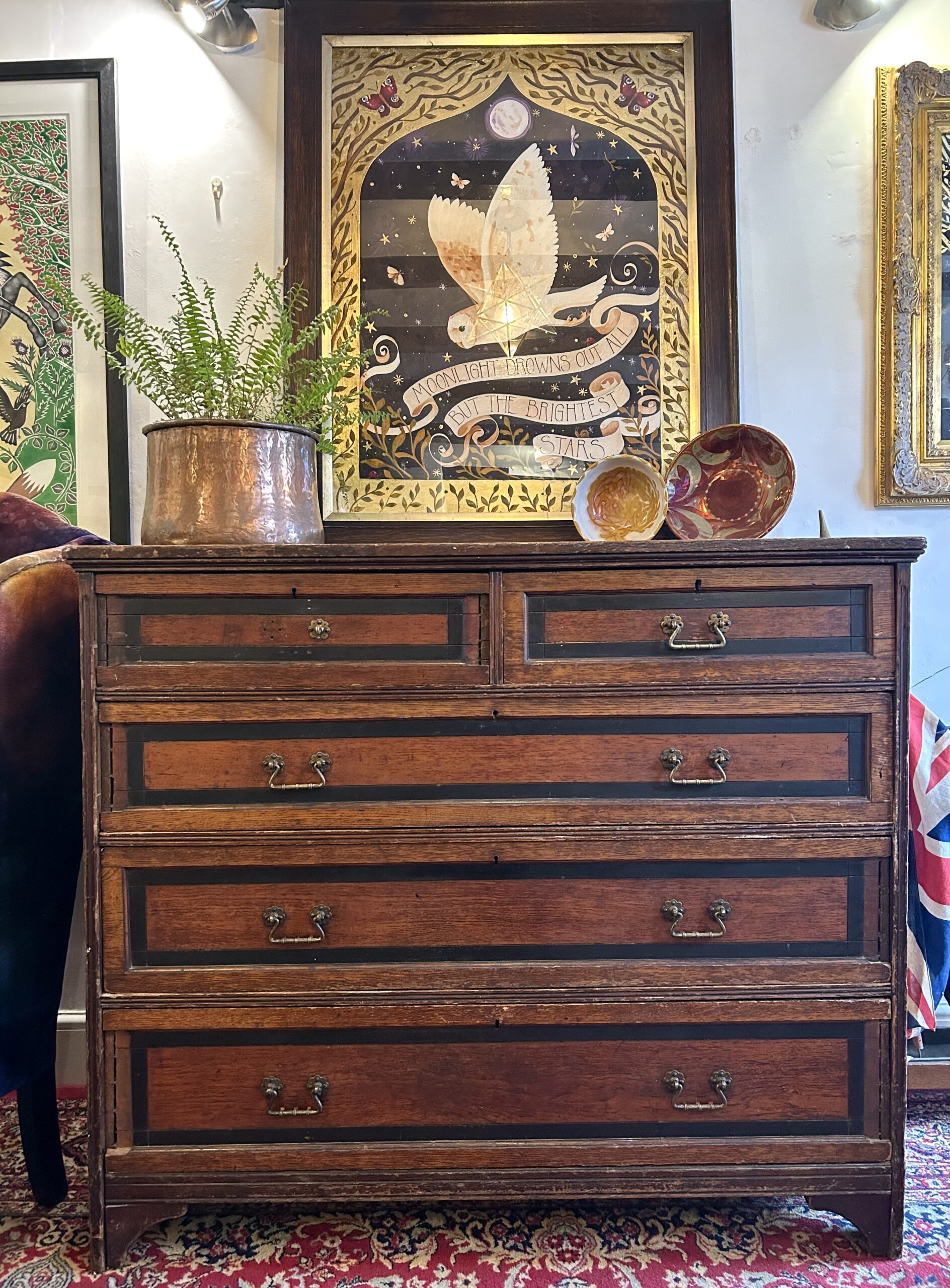
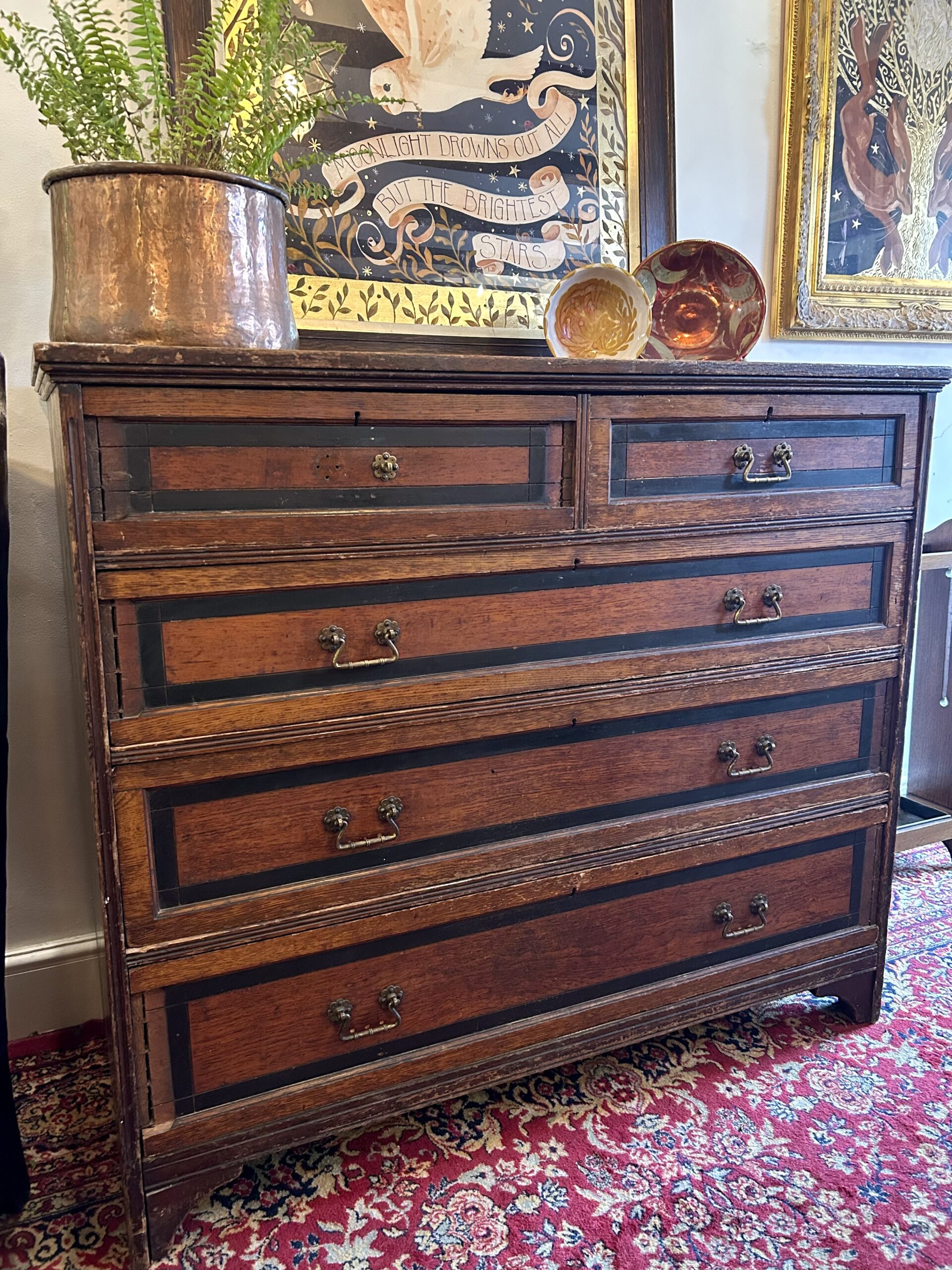
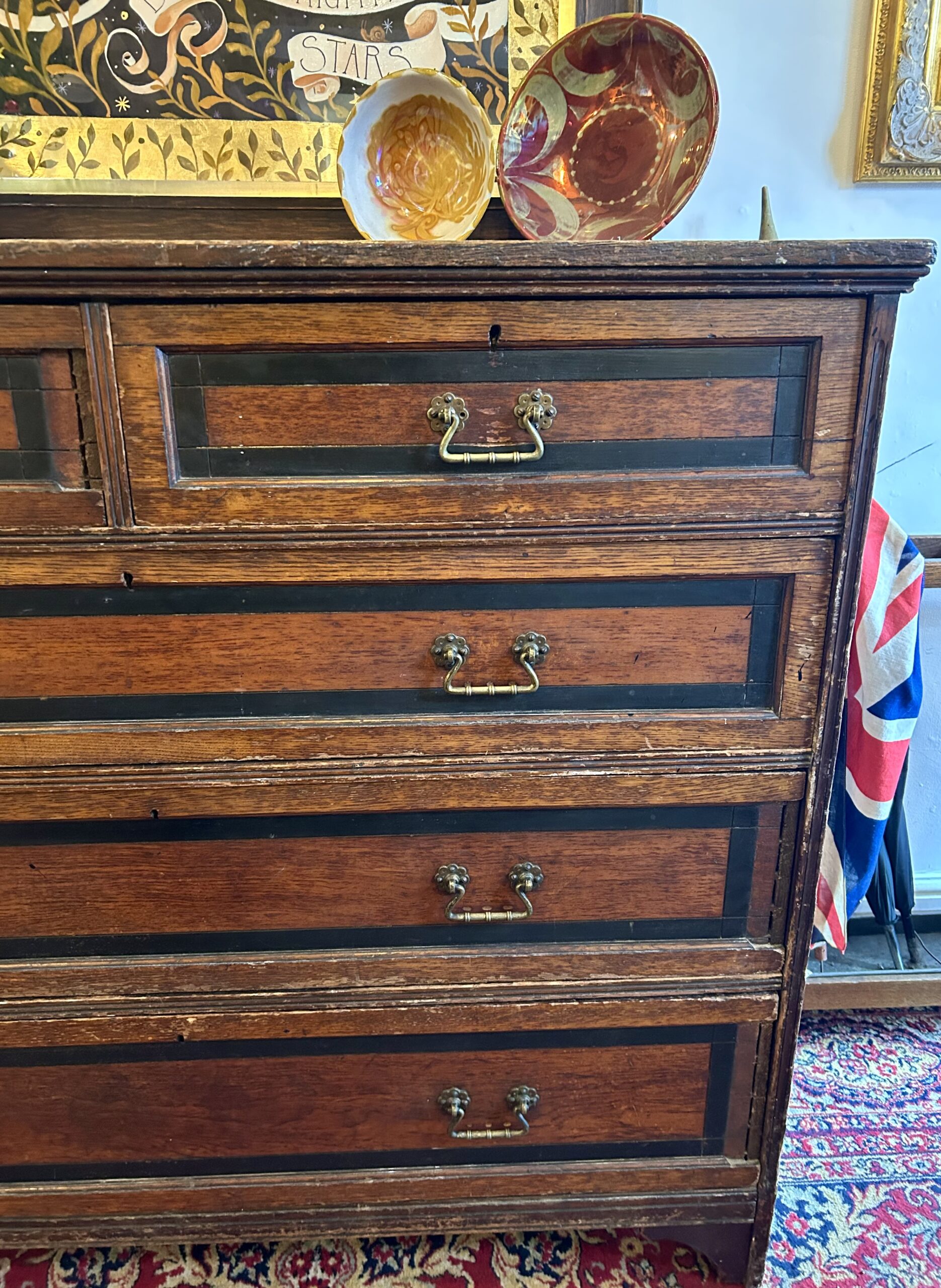
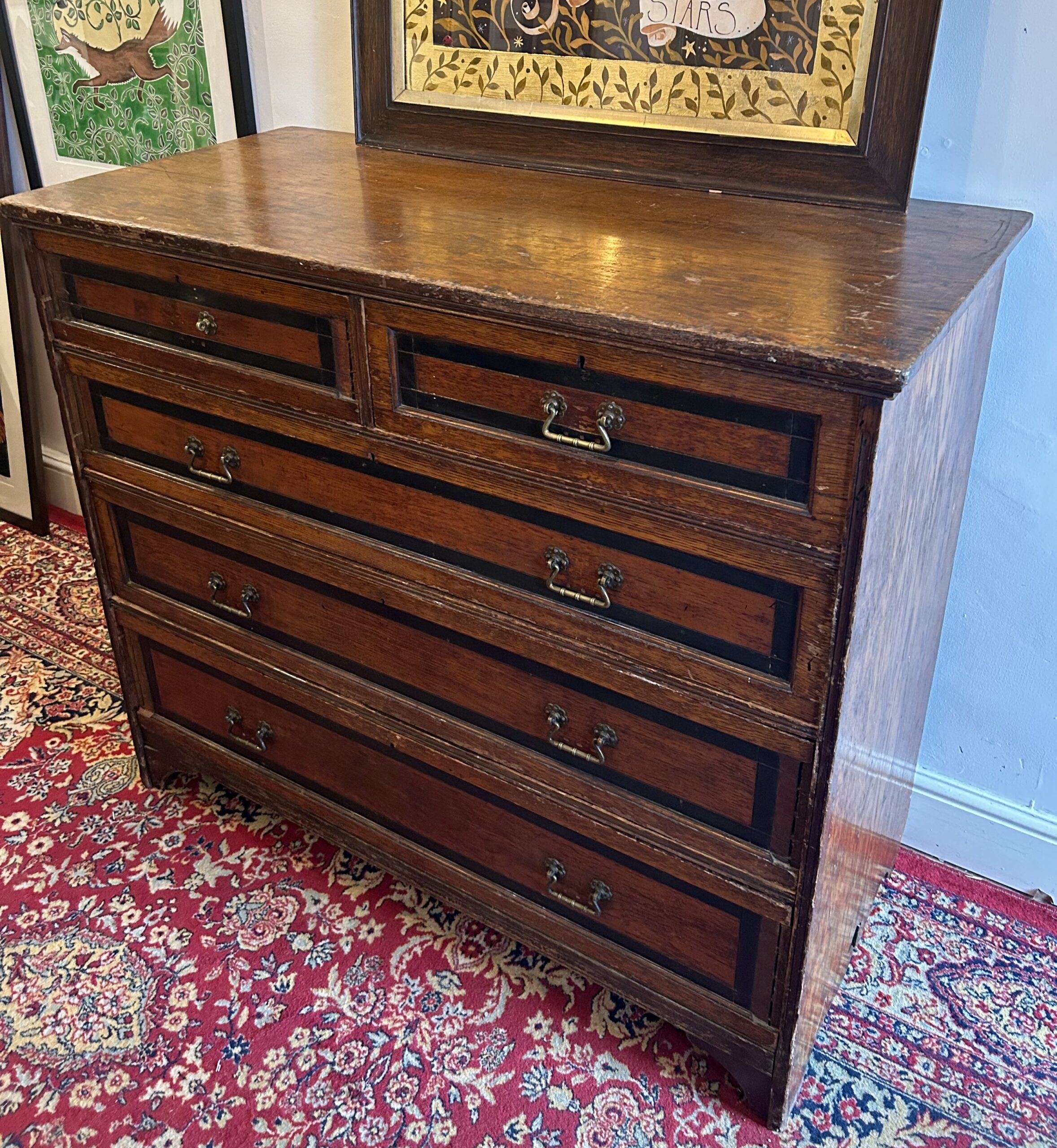
A large Reformed Gothic / Aesthetic Movement chest of drawers in the manner of Bruce Talbert. Made by Gillow & Co circa 1875, likely for the Midland Grand Hotel at Saint Pancras Station, London, we discovered this forgotten but significant piece only a stone’s throw away in a Euston tenement.
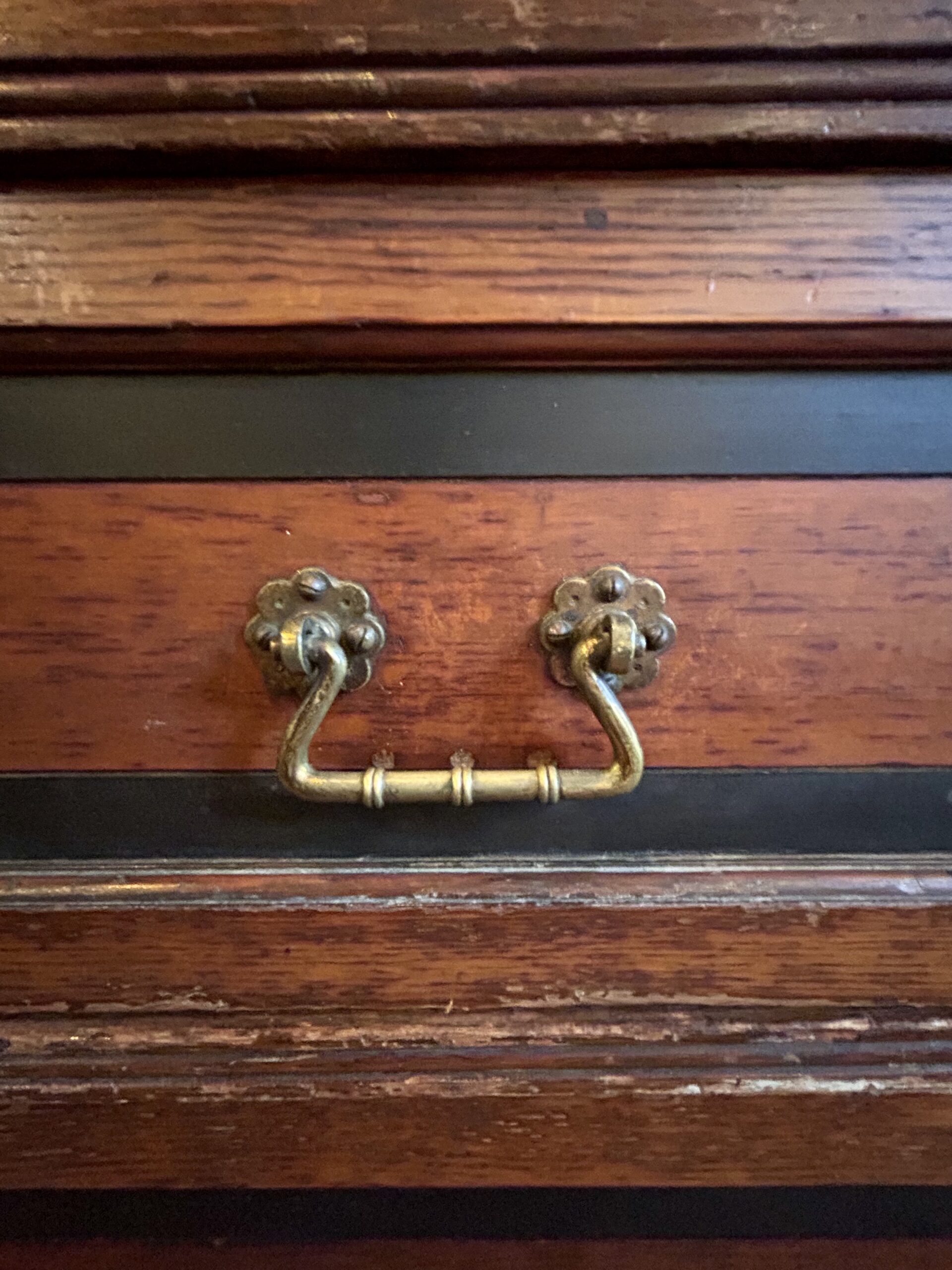
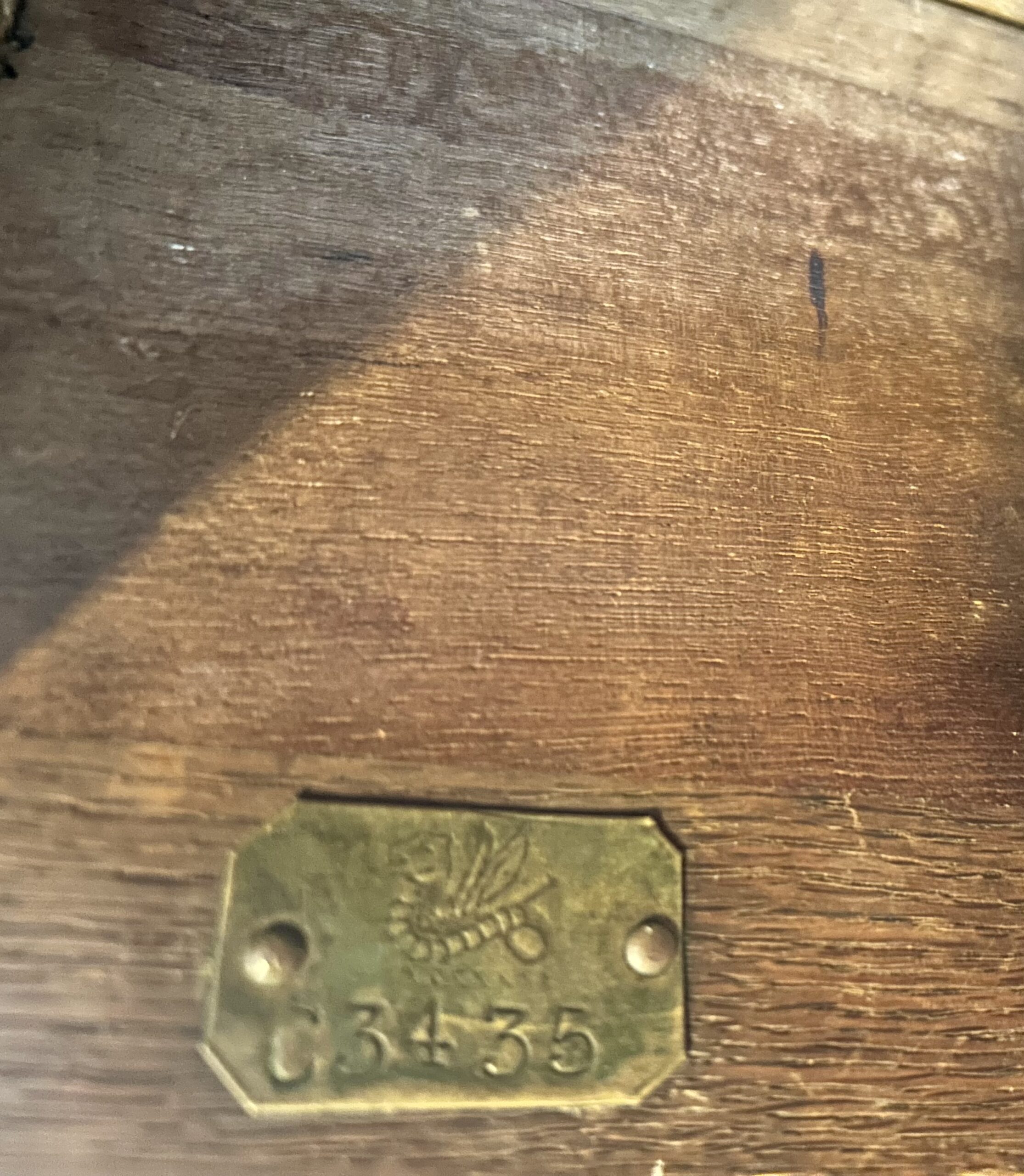
Well proportioned and solidly constructed with three large drawers of graduated depth below two smaller. Ebonised edging detail to the walnut grained drawer fronts, all benefitting from quality dovetail construction and brass hardware. Original brass Gillow & Co plaque and stamp to the top left and right drawers respectively.
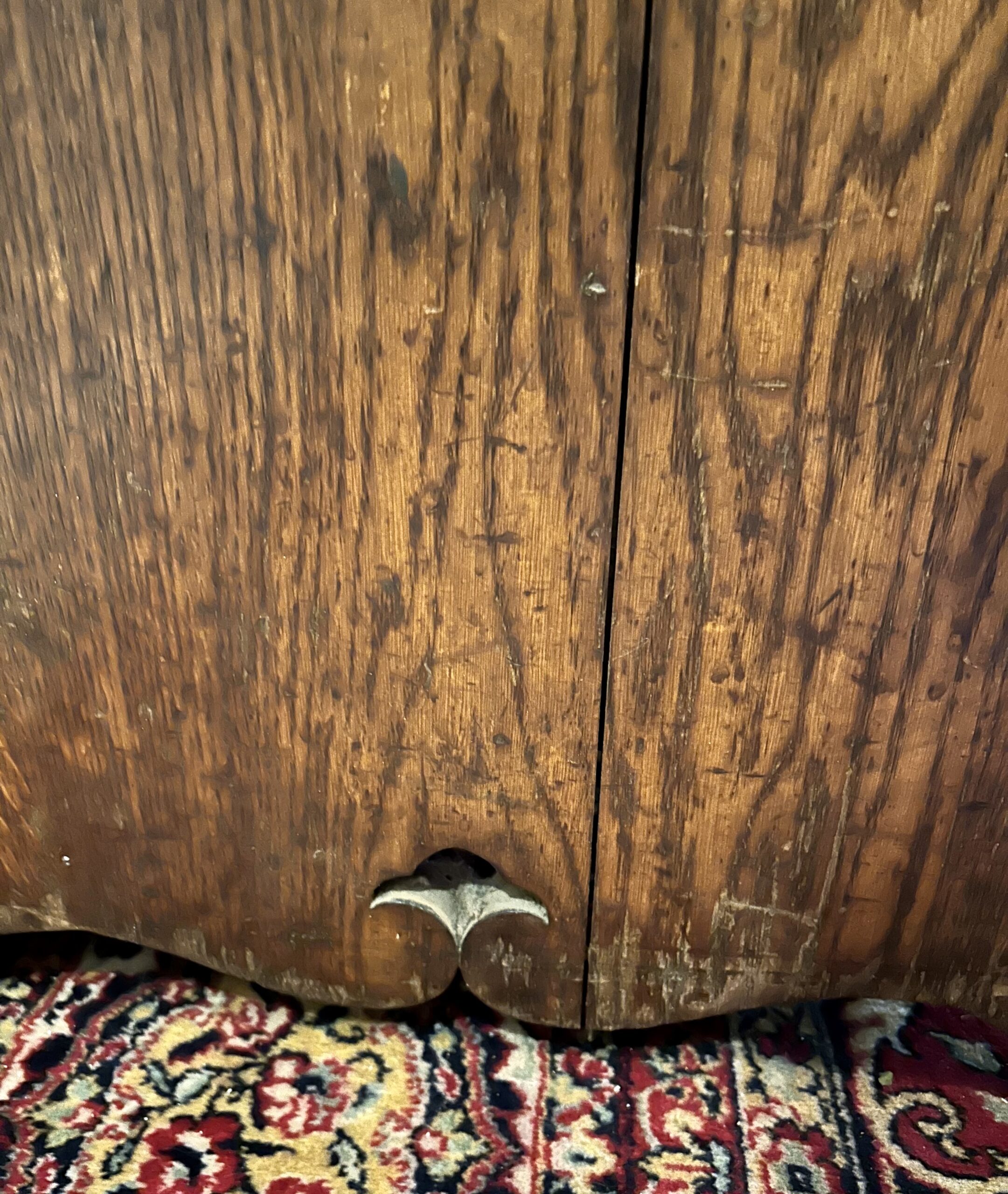
Showing wear and tear commensurate with age, it will be the subject of a light touch restoration, beginning with a precise re-casting of its missing brass drawer handle.
Dimensions:
Width: 122 cm (48 inches)
Height: 105 cm (41.4 inches)
Depth: 60.5 cm (23.75 inches)
Please enquire for delivery cost.
The Midland Grand Hotel was built to the designs of Sir George Gilbert Scott between 1868 and 1874 to front Saint Pancras Station, the London terminus of the Midland Railway.
The hotel’s furniture and interiors, for which the widely admired Gillow & Co of Lancaster and London successfully tendered in 1872, illustrate the later phase of the Gothic Revival that emerged during the 1860s and 1870s, coinciding with the Art Furniture or Aesthetic Movement. Often described as Modern or Reformed Gothic, it represented a more decorative interpretation of the Gothic style, taking medieval architectural elements that were scaled for application to furniture, in addition to flat-patterned decoration such as marquetry or low relief carving.
One of the leading proponents of the Reformed Gothic style was the architect and commercial designer Bruce James Talbert (1838-1881). He worked for Gillows on a freelance basis from about 1868 to 1871, just before the Midland Grand Hotel commission. Numerous references to “Talbert chairs” appear throughout the Midland Grand Inventory and his influence is recognisable in several of Gillows’ furniture designs for the project. Further evidence has been found in the sale catalogue of Talbert’s effects after his death. Lot 109 comprised “several sketches, architectural and otherwise, 10 in all [amongst these are the competition designs for the Midland Hotel, St. Pancras].” Talbert had also worked, early in his career, on ornamental gates to designs by Sir George Gilbert Scott, whilst employed by the respected art metalworking firm Skidmore of Coventry. It therefore seems likely that Talbert worked with Gillows in some capacity on furniture designs for the Midland Grand project.
In typical Victorian hierarchy, the rooms on the hotel’s upper floors were much more modest in scale and decor than those on the lower floors. The timber used in the furniture differed between the floors in accordance with the status of the occupants. The servants’ rooms in the attic were supplied with furniture made of “deal, japanned, as oak”. The fifth and fourth floors were fitted with furniture made of ash; on the third floor the furniture was “of mahogany and black, parts being carved, incised and ebonized”; the second floor rooms were furnished in oak; and the first floor with “furniture of walnut and black wood relieved with gold.” A contemporary periodical, The House Furnisher and Decorator, commented that “The sitting- and bed-rooms on the upper floors have had care and taste bestowed upon them equal to that of the lower, but in a simple manner; combining the comfort of more sumptuous rooms with less costly materials.”
Our piece appears to be of heavy pitch pine or deal, scumble glazed with an oak grain on the top and sides and walnut grain to the draw fronts with ebonised stained accents, placing it in the servants’ quarters. A further small brass plaque in the top right drawer bears what appears to be an inventory number and a crest, apparently a wyvern, the winged heraldic beast adopted by the Midland Railway as its symbol.