SOLD
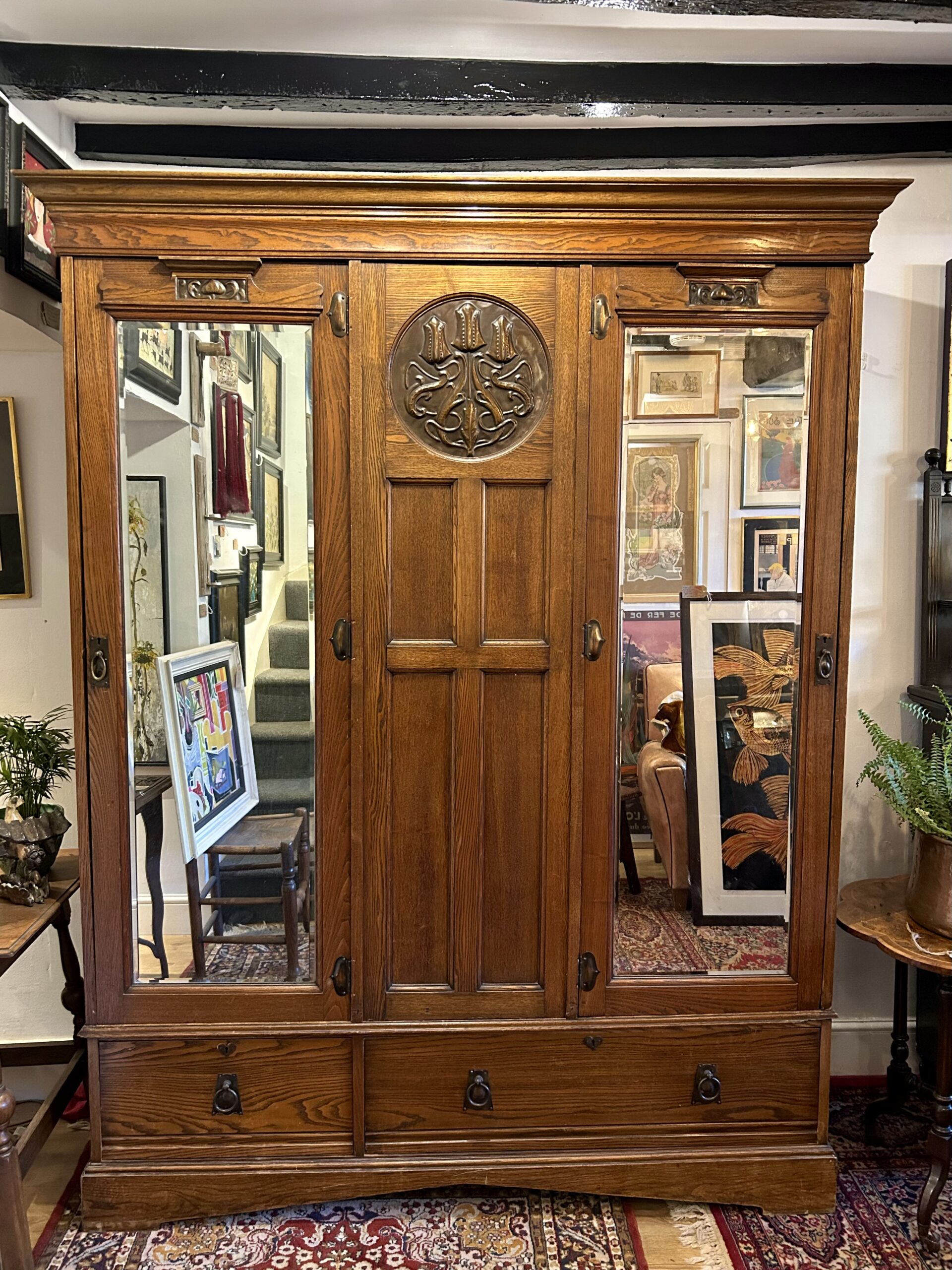
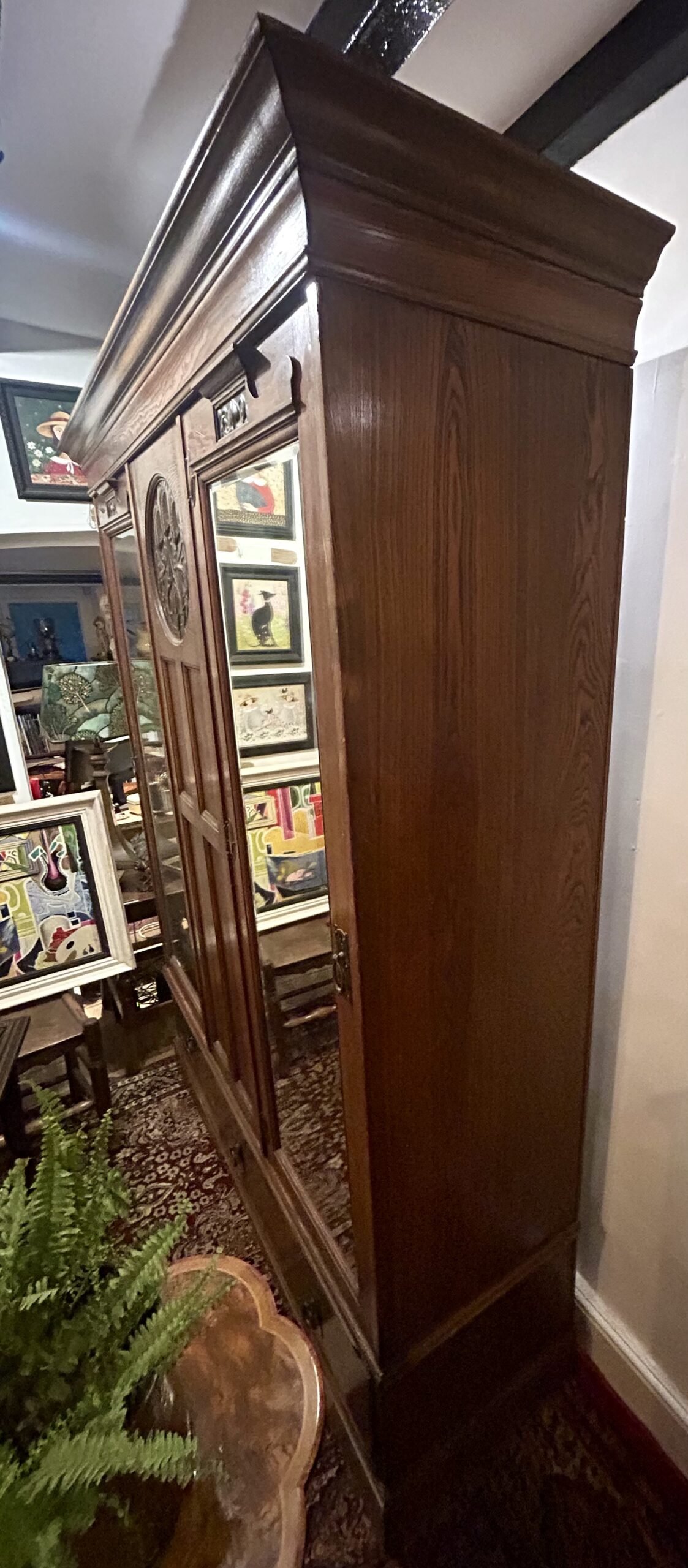
A superb quality double wardrobe in English oak and ash by Shapland and Petter Ltd of Barnstaple.
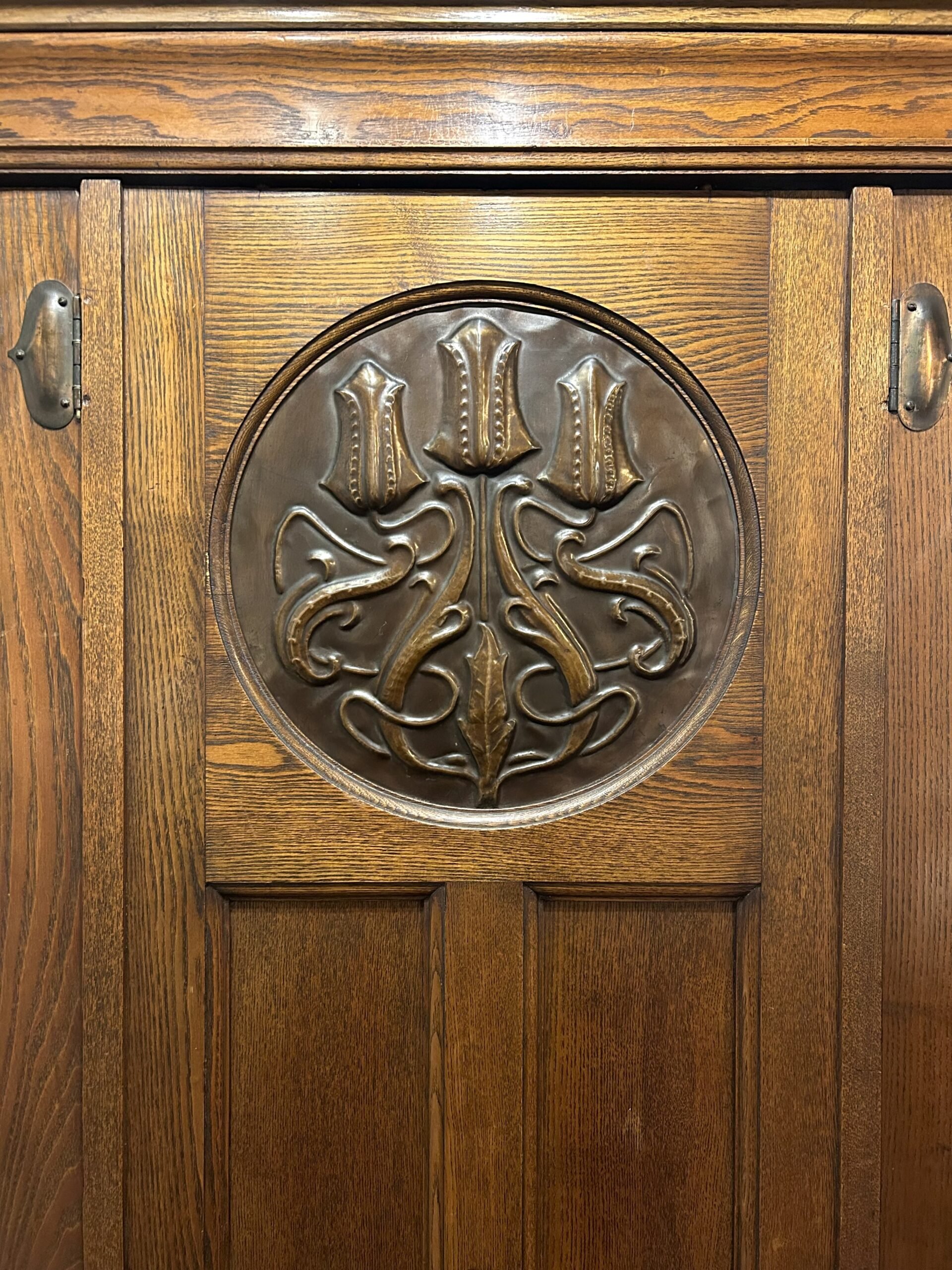
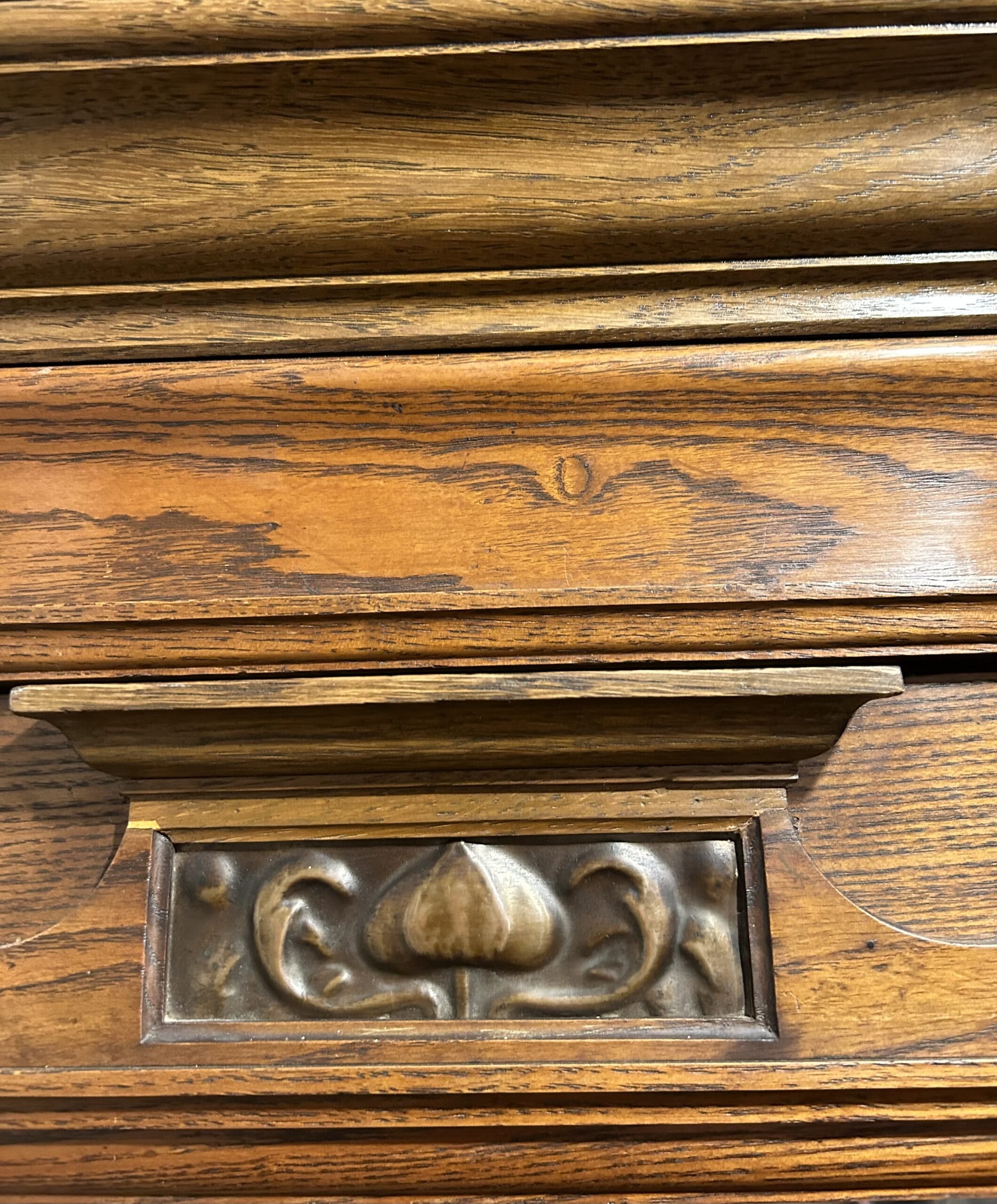
Under a flared cornice and frieze, a pair of bevelled mirror doors topped with carved pediment mouldings inlaid with copper panels in a characteristic Arts and Crafts bud design; flanking a central fielded panel topped with a striking inlaid circular repoussé copper panel in a stylised tulips design.
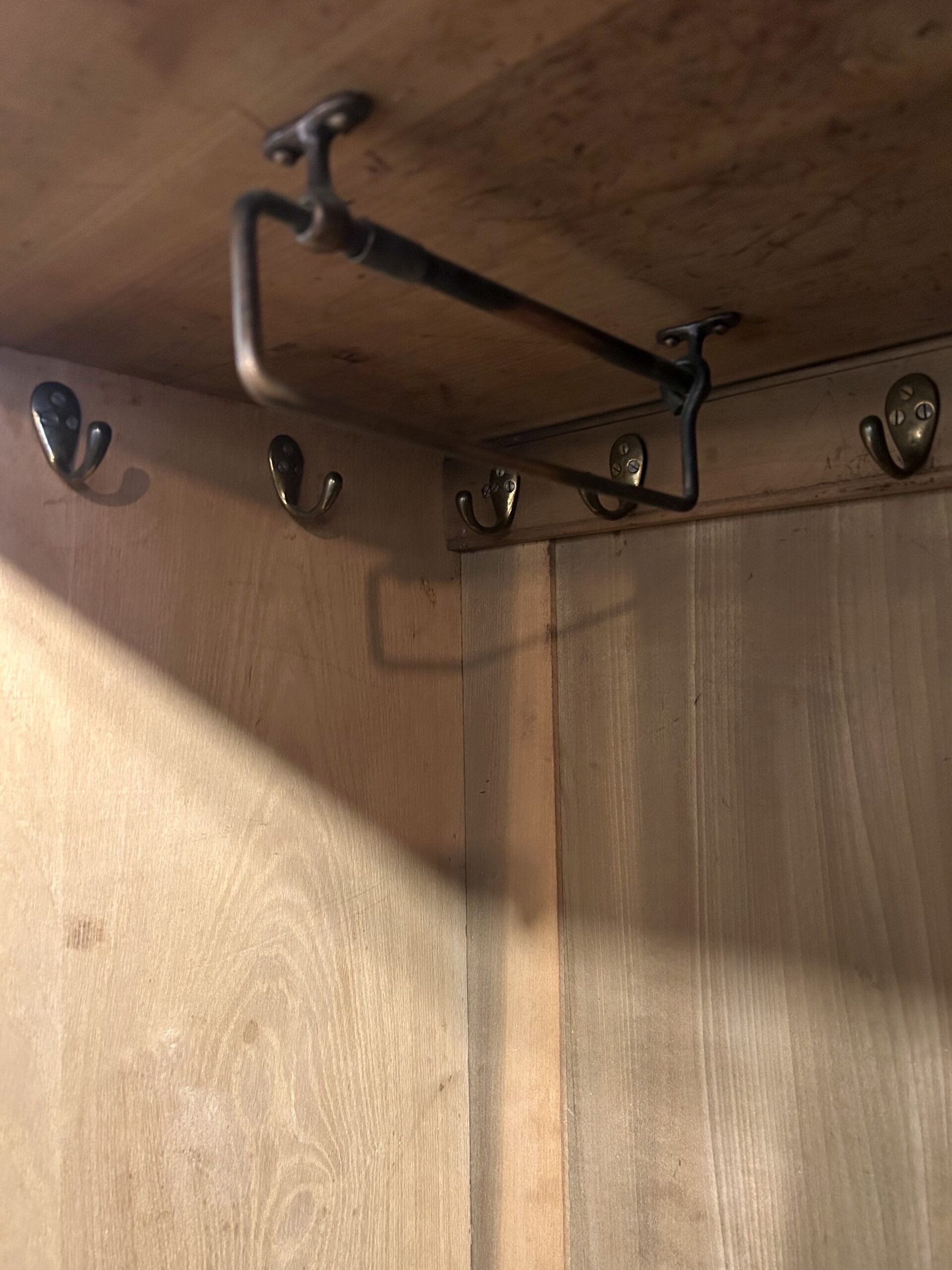
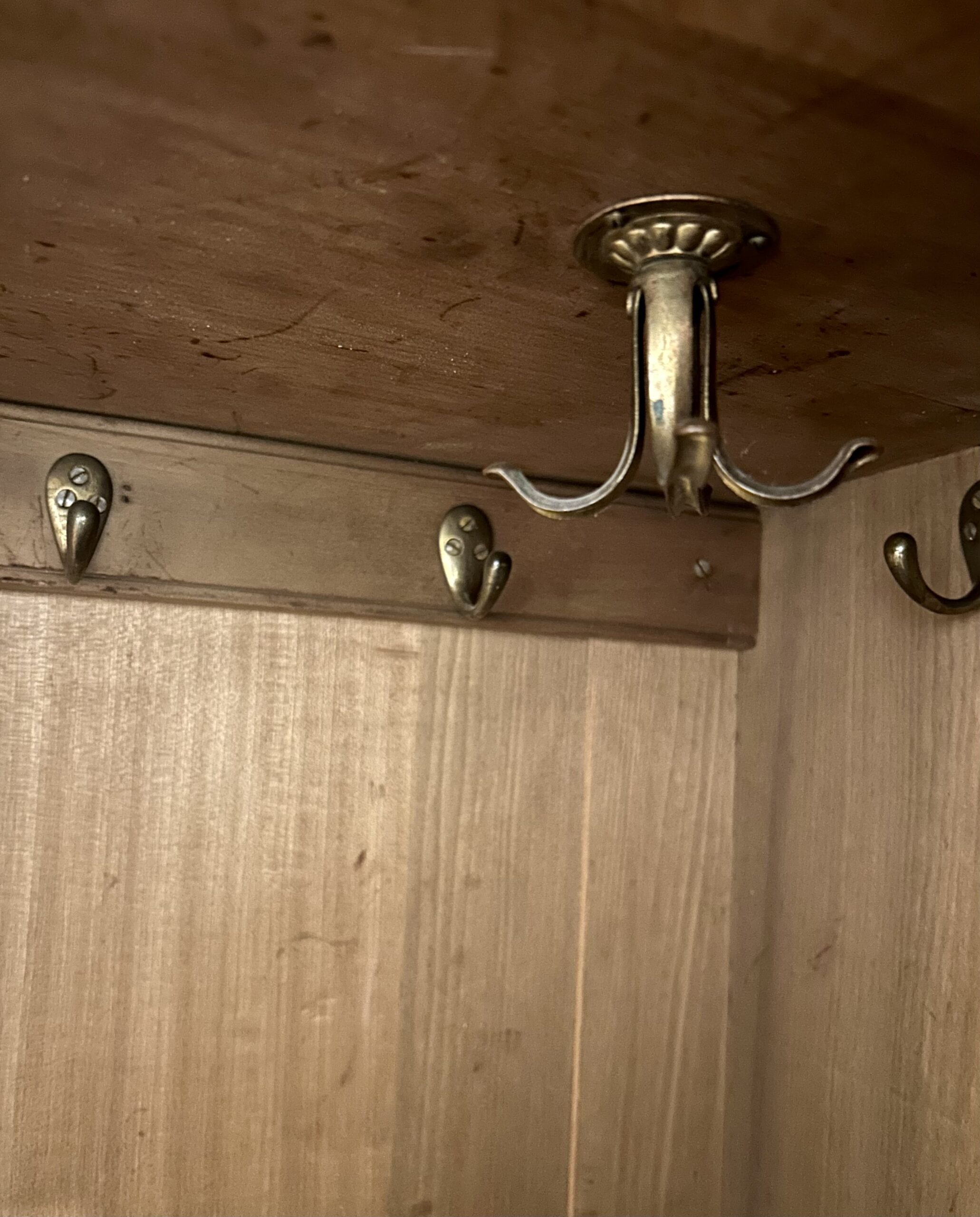
Twin full height compartments with original hooks and trouser hangers. The base with two capacious drawers in one third/ two thirds configuration, raised on shaped bracket feet. All original patinated copper hinges, handles and locks marked “S P B”.
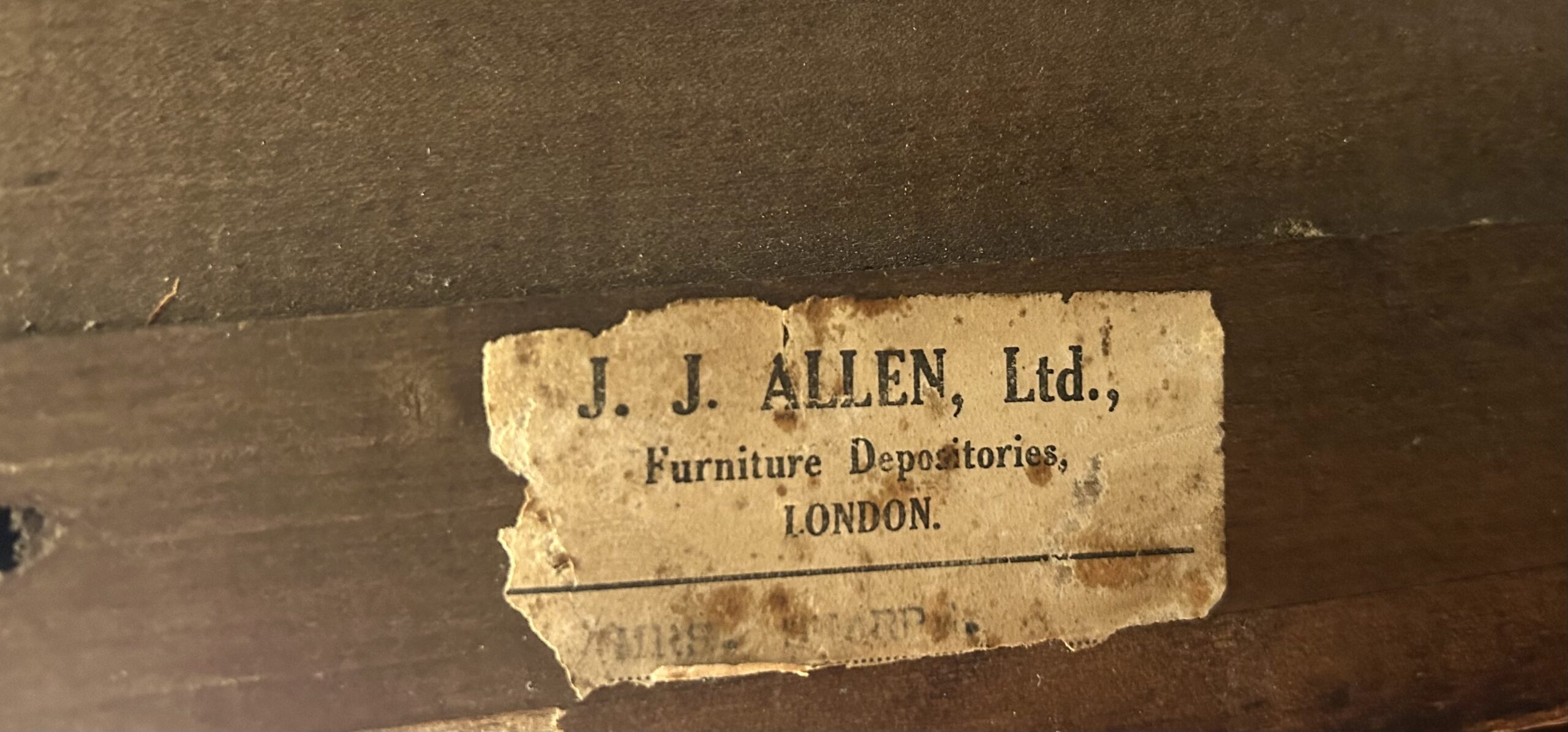
Breaks down completely into its component parts for transportation. Indeed, this is a well-travelled one family owned piece. The original London owner was posted to America by his employers early in the 20th Century and the wardrobe went with him, both later returning to London where the piece remained until recently.
Circa 1903.
Maximum Dimensions:
Height: 207 cm (81.5 inches)
Width: 164 cm (61.5 inches)
Depth: 52 cm (20.5 inches)
Please enquire for delivery cost.
Henry Shapland was born in Barnstaple, North Devon, in 1823. He completed his apprenticeship with a local cabinet maker before moving to London until 1847, when he married a Barnstaple lady and they set sail for America. Whilst there, he saw a newly invented German machine producing finely carved mouldings on curved surfaces and, returning to Devon, he set up in business manufacturing mouldings, having recreated the machine that he had seen in America.
In 1854, Shapland and Henry Petter (born circa 1827), another Barnstaple man who had returned from London where he had been working in publishing, founded Shapland and Petter. With the benefit of Shapland’s machine and later inventions speeding up cabinet and chair making via a production line, together with Petter’s contacts and business acumen, the firm expanded to produce furniture as well as mouldings. They sold to the public and wholesale to the trade. In 1864 Shapland and Petter bought the Raleigh Mill on the outskirts of the town and converted it wholly to furniture production.
In 1887 Henry Shapland Snr and Henry Petter Snr retired, and the firm continued under the management of their sons. A fire in 1888 destroyed the firm’s premises, creating an opportunity to purpose build a new and modern factory at Bridge Wharf on the River Taw, near the centre of Barnstaple.
In 1891, the firm took “commodious showrooms” at 3 St Andrew Street, Holborn Circus, London, where they displayed a selection of cabinet furniture, and from about 1893, they sold directly to customers at their shop in Berners Street, London. They also supplied Liberty & Co, Waring & Gillow, Wylie & Lochhead in Glasgow and Christopher Pratt’s of Bradford. By 1900 Shapland & Petter were employing 400 people in Barnstaple.
Although they employed craftsmen and much of their output was Arts and Crafts in design, the firm remained keen to adopt the most up to date machinery and were rated as one of the leading companies in the mechanisation of furniture making. Renowned for excellent design and workmanship, their Arts and Crafts and Art Nouveau influenced furniture remains best known and prized today.